
Category Archives: Genomics

Decided? No, we just finished saying Good Morning: Sage Congress 2011

“Therefore a sage has said, ‘I will do nothing (of purpose), and the people will be transformed of themselves; I will be fond of keeping still, and the people will of themselves become correct. I will take no trouble about it, and the people will of themselves become rich; I will manifest no ambition, and the people will of themselves attain to the primitive simplicity’ ”  reads Ch. 57 of the Tao Te Ching. How chillingly the 2 millennia old caricature of a wise-learned man holds true to this day.

Sage Bionetworks is a medical research organization, whose goal is “to share research and development of biological network models and their application to human disease and biology.” To this end, top geneticists, clinicians, computer scientists and pharmaceutical researchers gathered this weekend at UC San Francisco. We were given an inspirational speech by a cancer survivor, followed by report of the progress since last years congress. Although admirable on their own, the research and programs built in the last year seemed to remind us all again that in silico research was still closer to the speed of traditional life-science than the leaps and bounds by which the internet moves.
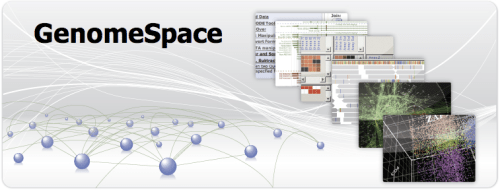
Example of an effort which aligns with & was presented at Sage

Projects like GenomeSpace by the Broad Institute give us hope of what’s possible while watching hours of debate and conjecture at Sagecon.  There were many distinguished scientists, authors , nobel laureates and government representatives, the totality of whose achievement here was coming to agreement on what should be built, who should build it and by when. Groups were divided into subgroups, and then those divided yet again. All the little policy details, software choices and even funding options would be worked out. There was a lot of talk.

Normal Conference VS Developer Conference. SHDH Illustrated by Derek Yu

Attending gatherings for software developers in silicon valley, their hackathons leave much to be desired at events like Sagecon, the least of which being the beer. I doubt anyone enjoys sitting in a stuffy blazer listening to talks for hours on end. The hacker events are very informal, there is no set goal, yet by the end of 24 hours there are often great new programs, friendships and even companies formed. Iteration rate is key to finding solutions and the rate-limiting step in the life-sciences & medicine isn’t the talent or resources it’s the culture; an opinion echoed by Sages’ own shorts-wearing heroes Aled Edwards & Eric Schadt.

“You must understand, young Hobbit, it takes a long time to say anything in Old Entish. And we never say anything unless it is worth taking a long time to say. “

Leave a comment

Filed under Genomics, Microbiology

Biotech for Hackers: Computational Genomics 1 of 2

A low hurdle to entry along with the ability to iterate rapidly is key to taking on problems & creating solutions. What do these solutions look like in genomics and why can hackers lead the way? Fig 1 shows something very similar to social interaction maps one comes across at places like Facebook.

Fig 1: Interaction map of genes implicated in Alzheimer's. Genes were grouped by those that have similar functions (squares) and those with different functions (circles). Modules with a red border have high confidence interactions. While the weight of the connecting green lines corresponds to the number of interactions between two sets.

The map above is of individual gene relationships where an algorithm began with 12 seed genes that previous experiments have shown to play a role in Alzheimer’s disease. These seeds were compared with 185 new candidate genes from regions deemed susceptible to carrying Alzheimer’s genes. From here, both experimental and computational data was combined to generate Fig 1, which the authors dubbed AD-PIN (Alzheimer’s Disease Protein Interaction Network).

Fig 2: Interactions discovered by the Hig-Confidence (HC) set generated by this study in context to known relationships in the Human Interactome (created in past studies).

What we learn by simply tracking genes already known to play a role in Alzheimer’s is the discovery of new regions of genetic code that are  also participating in the expression of related functions, in this case those being affected by the disease, such as memory. In Fig 2 we see that between seeds this algorithm produced 7 high confidence interaction results, of which 3 were  in common with previous studies. In addition to almost 200 new interactions, which can each lead to new therapies, blockbuster drugs and better understanding of the disease itself.

Many software developers have extensive experience and interest in dealing with large data sets, finding correlations  and creating meaningful solutions. However, much of our generation has had little exposure to these problems. Often resulting in the bandwagon effect, as one recent article put it “the latest fucking location fucking based fucking mobile fucking app.” Progress has often been linked to literacy, from books to programming, being able to read and write in life-code just might be the next stage.

Original published study: Interactome mapping suggests new mechanistic details underlying Alzheimer’s disease by Soler-Lopez et al.

1 Comment

Filed under Genomics

Live @ Future of Genomic Medicine IV: Juan Enriquez – Understanding Life Codes

Managing Director at Excel Medical Ventures and CEO of Biotechonomy. Begins with talk of economy, dangers of bank leverage. BofA lends out $47 per $1 in-hand. Banks fail, gov tries to help, banks bring gov down as well. Dancing in the flames, this is our [researchers] arena, technology is a larger wave than any financial crisis, you will either be washed away or surf  it. Moving from digital code to life code. Man vs mouse 5% difference. Humans transmit code through time. Tribe vs empire as result of standardized code. Changes in code matter, the dominant code is changing, from “01” to “ATGC”. Life is imperfectly transmitted code, imperfection is important. Life code will be the big driver of the global economy. Aileron, protein stabilizers, $1.1B deal. You can order bioreactor and organ printers from Harvard Regenerative Medicine magazine. Community matters, if you’re around happy people you are happy, if you are around obesity than you are inclined to be obese, importance of startup culture to medicine. Can’t genomics be dangerous? Prove to me it will never hurt anyone and we’ll allow you to sell it, in this scheme table salt would not pass FDA clinical trial. Must innovate information infrastructure to handle genomic data.

Leave a comment

Filed under Genomics

Library of Life: Genomic Databases & Browsers

DNA at it’s heart is enormous chunks of information. The genome of an organism like  yeast, mice or humans contains an ocean of data. Currently there are several on-line genomic databases, a great example being SGD dedicated to the yeast S. cerevisiae. SGD has become a necessary tool for life-scientist over the past 10  years but at the same time has not kept up with information technology, resulting in a platform which works like a 10 year old website.

SGD is clunky but necessary, for now

Above we see a typical SGD search, it takes  5 windows to arrive at the sequence data of 1 gene. Nevertheless, SGD is used by drug companies trying to find the next big hit, academic labs trying to cure cancer and field biologists studying wildlife.

DNA is extracted and placed through a sequencing machine which spits out the information into a computer file.  Just as having an aged internet browser affects our productivity the browser one uses to view these files can have a large impact. Following the web-browser analogy we take a look at 3 different sequence browsers, starting with Vector NTI.

Vector NTI is enterprise software.

Vector NTI is well established and often bundled with hardware. It has many features but can often seem like information overload, causing most users to stumble through it’s many menus and windows. A step up in usability comes from the third-party software suite Sequencher, popular amongst mac users.

Sequencher is your friend

Sequencher strikes a healthy balance between features and usability. But is a fairly resource intensive program requiring CDs and hard drive space to store local algorithms. However, the most up to date browser is likely to be the free and light download, 4Peaks.

4Peaks Simplicity & Usability

4Peaks allows the user to go in, read their sequence file and get out. What it lacks in features it makes up for in simplicity. The end result of any software or database is to help researchers wade through all this information and continue their studies. In this environment services such as GENEART offers to perform much of the genomic related leg work on a given project.

These are all tools, the databases, browsers and services, which enable researchers to answer the questions that line our horizon. The progress of our tools has always directly correlated with our advancement, the life sciences adoption of information technology is a necessity as we discover so much of life is condensed data in every nook.

1 Comment

Filed under Genomics, Microbiology, PCR

The Polymerase Chain Reaction, A Microcosm

Creating a new life-form is an awe-inspiring experience. Writing DNA like a mere sentence and watching creation unfold in the mechanism of life is both breathtaking and humbling. None of this would be possible without the Polymerase Chain Reaction (PCR). A simple process where all the ingredients for DNA: a teaspoon of reagents, a pinch of polymerase enzyme and a handful of the “letters” that make up our genetic code are thrown into the oven, literally, well a very accurate oven that can step temperatures rather quickly. Within hours the sentence you had written out on a computer screen, is now molecules floating around in a tiny tube ready to be put into a cell, which will read the instructions and attempt to build or act accordingly. Using this simple idea the human race has been handed over the keys to the Build a Life Workshop, however this simple process often goes without scrutiny, without improvement.

Basic Principles of PCR

Much of the drug discovery in both academia and industry is now focused on protein mechanics. How does this receptor behave? What buttons turn this enzyme on and off? Focusing on protein structure and mechanism often makes PCR a boring chore that most researchers have to grudgingly get past before they can get to the interesting part. As a result, the basic process of PCR has remained the same for decades. I literally remember when a P.I. gave me a paper from 1985 to look up what settings I should use for my reaction. All this wouldn’t be a problem, except people are often wasting weeks to months trying to get the right PCR outcomes. At the root of the problem & the solution is information. PCR is a “black box” process, in that you throw all the ingredients together turn on the machine and hope that all the right molecules will bump into each other at the right times. Traditionally, it has been a exasperating trial & error based system. Now however, information technology has given a glimpse of a solution and a way to move forward to the next chapter in the development of this life-science staple.

Leave a comment

Filed under Genomics, Microbiology, PCR