Cancer, Stress, Genomic Treatments & Steve Jobs

Of the billions of letters making up our life-code a few simple mistakes can cause a cell to stop following the rules, multiply endlessly and destroy it’s host eco-system, you. What can introduce such mistakes in our DNA? The riskiest time being when DNA is copied, a completely molecular-mechanical processes, something that happens billions of times each day in our bodies. It then comes as no surprise that given enough time the likelihood of cancer only increases. However, life is so incredible that it’s managed to develop ingenious ways to spell-check and prevent these mistakes. One of the more rockstar mechanisms are Telomeres, buffer regions at the ends of our chromosomes.

Telomere Caps

Because replication of our chromosomes begins near the center and works itself towards the ends, the two strands of DNA tend not to match up just right at the edges. This is where telomeres reside with their repetitive regions. The idea is it wouldn’t matter if we loose some of them, which is what happens, telomeres shorten over time. Recent research however, has shown strong correlation between the degree of shortening and disease risk, specifically diseases with genomics causes, i.e., cancer. In 2009 the Nobel Prize for Physiology or Medicine was awarded to Elizabeth Blackburn of UCSF for her work in telomeres, including demonstration of the relationship between telomere length, mental stress and cancer.
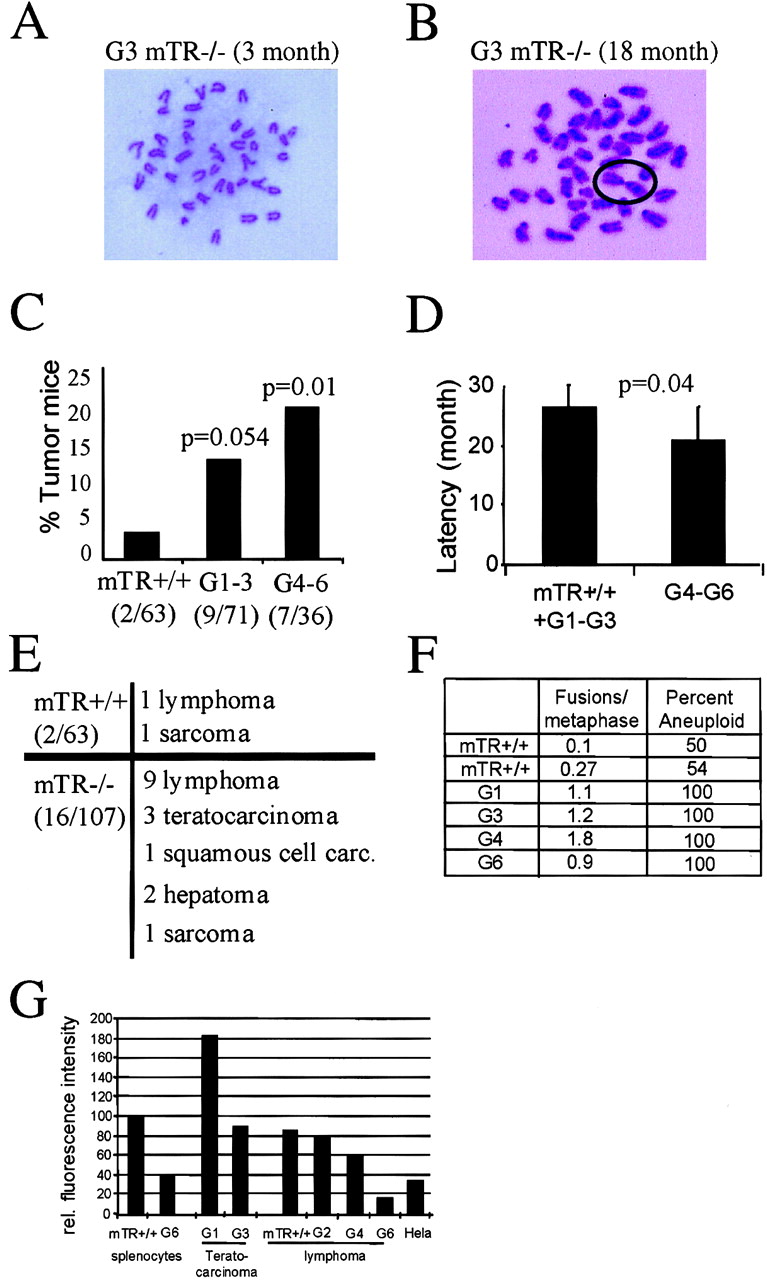
Genomic Instability and an Increased Incidence of Spontaneous Cancer in Aging mTR−/− Mice

As far as clinical applications of genomics for cancers, two conclusions can be drawn. For prevention, the importance of mental stress in the mechanism of DNA replication. For diagnostics and treatments, the adoption of DNA sequencing both in risk-assessment, i.e., measuring telomere lengths and the use of pharmacogenomics in picking a drug regimen for subjects. Availability of such sequencing technologies is for the moment confined to localities of active genomics industries like San Francisco and the greater Cambridge, Massachusetts region, though often unknown to those in need.
This made me all the more flustered with the failure of clinicians to win Steve Jobs’ battle against cancer. As a case study, he clearly had the resources and lived in an area that is the birthplace of the genomics industry. Jobs was a meticulous individual who was very involved with his work, which leaves us to question his ability to deal with stress and the role that played in his remission & recurrence rates. Another lingering question remains, are the “best” oncologists money can buy, necessarily those who would employ sequencing techniques? Perhaps as time goes on we will learn more about his treatment regiment but for me it shines a bright light in the gap between what researchers see as possible and what clinicians feel comfortable utilizing.

Citations:
Impartial comparative analysis of measurement of leukocyte telomere length/DNA content by Southern blots and qPCR. Nucleic Acids Res. 2011 Aug 8. Aviv A, Hunt Sc, Lin J, Cao X, Kimura M, Blackburn E.

Longevity, Stress Response, and Cancer in Aging Telomerase-Deficient MiceKarl Lenhard Rudolph1, Sandy Chang, Han-Woong Lee, Maria Blasco, Geoffrey J Gottlieb, Carol Greider, Ronald A DePinho

Leukocyte Telomere Length in Major Depression: Correlations with Chronicity, Inflammation and Oxidative Stress – Preliminary Findings. Wolkowitz OM, Mellon SH, Epel ES, Lin J, Dhabhar FS, et al. 2011 PLoS ONE 6(3): e17837.

1 Comment

Filed under Genomics, Meditation, Neuroscience

Zero-mode Waveguide & Single Molecule Real Time Sequencing

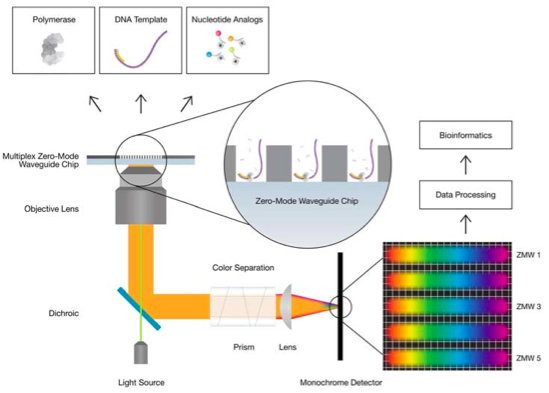
Zero-mode Waveguide - a hole, tens of nanometers in diameter, smaller than the wavelength of light used. Providing a window for watching DNA polymerase write.

Last week saw something of a historic announcement that may well be seen in grander light by our offspring than us. 23 & Me announced the $999 Exome, all the protein coding regions of our genome. This for the first time makes it feasible to extract significant amounts of genomic information from patients, consumers & trial subjects. At the same time the founders of Complete Genomics wrote an article on the lowering costs of sequencing, showing some great numbers on technologies that use less reagents, cheaper machines and faster results. Advancements are so frequent in this field it seems, though what gets me really excited is the concept of SMRT (Single Molecule Real Time) sequencing; the idea of reading a strand of DNA one letter at a time as it’s written. Most of our progress, like the $999 exome or the success of Complete Genomics has been possible as a result of High-Throughput sequencing, which evolved from the original Sanger sequencing methods. Whereas, Sanger sequencing would spit out few hundred letters of  DNA at a time, HT sequencing would spit out much less but at a faster rate. SMRT offers to give us long-reads, thousands of letters, at a fast rate. Several “in-progress” technologies that are promising long-reads range from pulling a DNA strand through nano-pores or using a large single atom that would run across a strand. ZMW (zero-mode waveguide) takes a unique approach in that it uses DNA Polymerase, the default DNA writing nano-machine in our cells to give readings as the strand is being written with fluorescent letters.

PacBio's SMRT Prototype

Although this is exciting stuff, I wonder how much it will help in the adoption of genomics in medicine. The old paradigm of pills and vaccines &  seeking magic-bullets it seems is embedded deep in our economic and psychological fabric. Now that the cost of sequencing is comparable to most other medical tests will it become as common-place as ordering an MRI or getting a new hip? Doesn’t seem like a $1000 price-tag would stop anyone. No, what has happened is we’ve handed kindergardeners college textbooks, it’s too much information and they haven’t a clue what to use it for. More than faster and cheaper, we need user-friendly, digestible data interpretation. ZMW and SMRT is sci-fi cool but if there’s anything to be learned from the world’s largest technology company it’s that adoption is more a game of collective-psyches than raw science & engineering.

Citations:

PacBio Technology Backgrounder 

How Low Can We Go? Molecules, Photons, and Bits by Clifford Reid

To the man who showed my whole generation the correlation between engineering, usability & adoption 

Leave a comment

Filed under Genomics

Drug Development from Binary to Gradient Model

Earlier this year a study by the Center for the Study of Drug Development at Tufts University placed the cost of developing a new drug at $1.3 billion [1].

Distribution of Development Funding

Though the number is contested by other researchers [2], it is well within the trend of pervious studies and has now been widely accepted as an industry wide average. Exacerbating the issue is the all or nothing nature of drug development, where failure during any phase of clinical trials can cause the termination of a project. It is therefore advantageous to consider technologies that will reduce the risk of this binary success/failure model and transition to a gradient definition of therapeutic efficacy.

Trending Costs of Drug Development

Much of the high costs come in during phase 2 & 3 trials, where patient care, clinical production and regulatory leg-work consumes funds at an alarming rate. With everything riding on the individual trial subjects, their well-being directly linked to success. Undesirable reactions to experimental treatments is unavoidable and the margins for serious adverse events is kept tight by regulatory agencies to protect healthcare consumers. Often however, ground-breaking treatments have to be shelved because they affect 10-15% of trial subjects detrimentally.

RD costs of new chemical entity (NCE)

This makes any ability to view trial subjects with increased resolution and discern subtle correlations with their reactions to consumer demographics key in cutting risks of total-loss. Here I hope a story about my own experience is helpful, as I know it better than what anyone else has had to dealt with. My time at Novartis began when I was brought on-board to help with the development of a drug entering a repeat Phase IIB trial, as the first time around approximately 15% of subjects showed an adverse reaction of note.

Draft FDA Guidance on DNA Sequencing & Clinical Trials

Soon however folks began to get cold-feet, do we dump further resources behind this project or cut our losses and iterate to the next project. A third option now becoming available is that perhaps there was something specific to those 15% of patients that caused the unwanted reaction. Identifying this would allow the drug to move along its pipeline with contraindications that covered the failing demographics. No longer limiting projects to pass/fail while hedging development risks.

Citations:
DiMasi et al,(2003) The price of innovation: new estimates of drug development costs
Ernst & Young Global Pharmaceutical Industry Report (2011) Progressions Building Pharma 3.0
Tufts Center for the Study of Drug Development (2011) Outlook 2011 report

Leave a comment

Filed under BigPharma, Genomics

The Fall in Gov Funding & Rise of Privatization in Genome Databases

Government Funded Sequence Database

As the spaceshuttle program comes to an end we are reminded of the role of goverments in birthing industries. And just like the manned space program, genomics has been mostly government funded and just like the space program it’s about to take a big hit:

Recently, NCBI announced that due to budget constraints, it would be discontinuing its Sequence Read Archive (SRA) and Trace Archive repositories for high-throughput sequence data. However, NIH has since committed interim funding for SRA in its current form until October 1, 2011.

With its fall there will be few if any (Japan: DDBJ & Europe: ERA) centralized public databases for nextgen sequencing. Once again we’re left to ride with the ruskies, figuratively speaking. Enter private industry and its first batter, from the SF Bay Area, DNA Nexus. Though Sundquist and his team have managed to create a very well polished and modern platform, unlike SRA there is no data aggregation. There is no public pool where researchers can access data. This is a problem in that much of the power of genomics comes from studying statistical trends and a large, public data pool is to date the best way to make any sense of what our genes say.

A similar private effort from the great innovators across the ocean comes in the form of Simbiot by Japan Bioinformatics K.K. At the moment Simbiot is edging a lead as they’ve recently released two mobile applications allowing sequence data management and analysis on the go. However, just as with DNA Nexus users are only given the option to keep their data within their own accounts or share with select others. Both of the aforementioned companies have well thought-out price plans, sleek interfaces and well produced videos. But what makes government efforts like the SRA valuable is that for a time they provided a centralized public data pool.

Said Infamous Graph

As anyone who’s seen the now infamous graph of the rate of decrease in sequencing costs vs that of Moore’s law will likely have figured out by now, the costs associated with maintaining a sequencing database only increases with adoption of the technology. As such, it was reasonable for Uncle Sam to pay for this party at first but the costs rise every year, by leaps. There must be a private model that is both aggregate & open in nature but can also pull it’s own weight in terms of cost; the future of healthcare and any form of “genomics industry” may well be dependant on it.

2 Comments

Filed under Genomics

SHDH45@Google: simple BLAST+ setup

Super Happy Dev House pays off once again, with a day that blurred the line between play and work. Reminiscent of the days in middle and high school where my parents would provide tables, power cords and snacks for those all night LAN parties. Except now Google was the host & playing games still ranked high on the agenda.

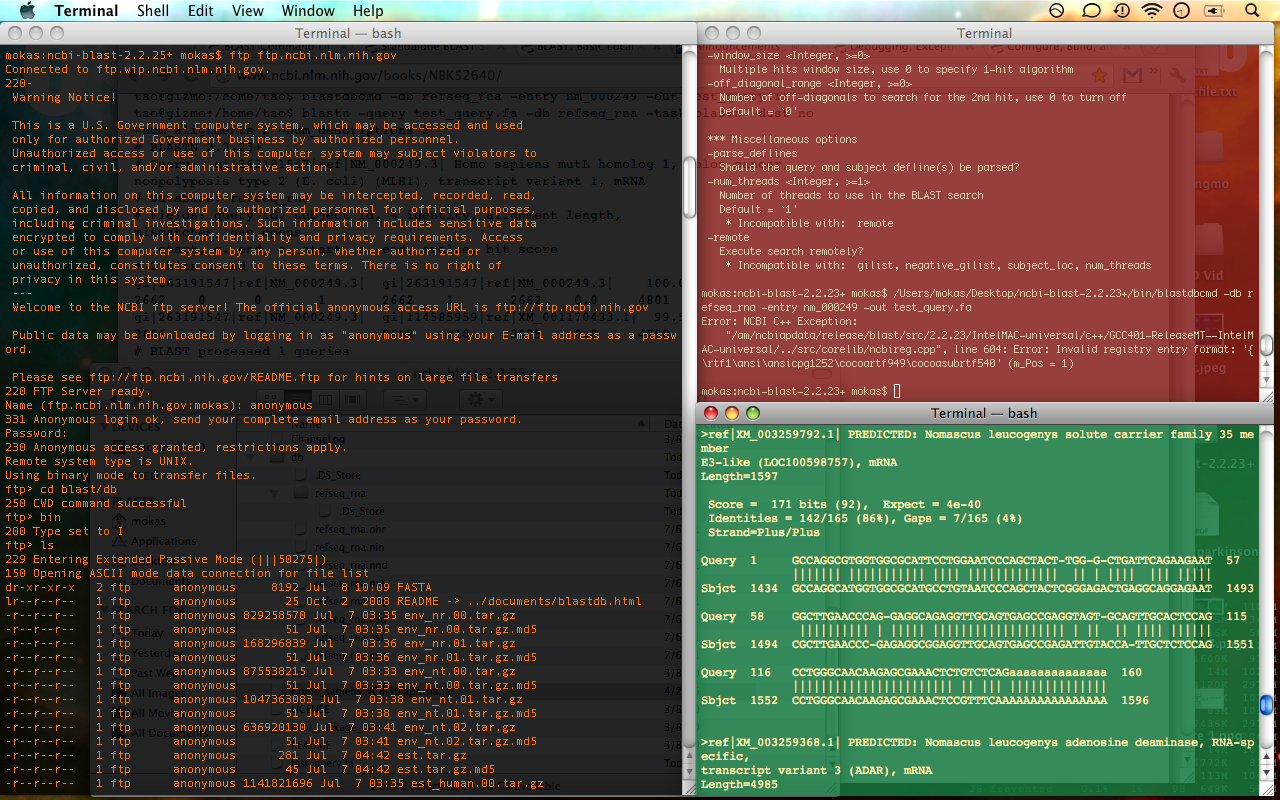
The National Center for Biotechnology Information (NCBI) provides a command line based standalone Basic Local Alignment Search Tool (BLAST) package known as BLAST+ to analyze and play with genomic sequence data. Although, the legacy web based BLAST can perform a range of functions, BLAST+ as a command line tool is much better to understand and analyze large amounts of nucleotide data. It may be best to get an idea of what sort of data we’re dealing with by getting into the government’s database:

mokas$ ftp ftp.ncbi.nlm.nih.gov
Connected to ftp.wip.ncbi.nlm.nih.gov.
220-
 Warning Notice!

 This is a U.S. Government computer system, which may be accessed and used
 only for authorized Government business by authorized personnel.
 Unauthorized access or use of this computer system may subject violators to
 criminal, civil, and/or administrative action.

 All information on this computer system may be intercepted, recorded, read,
 copied... There is no right of privacy in this system.

Don’t worry about the scary message, this is all public data… well until the funding stops. Take a look in the blast/db directory for many pre-formatted databases NCBI has provided, i.e. genomic & protein reference sequences, patent nucleotide sequence databases from USPTO & EU/Japan Patent Agencies. Get yourself the latest BLAST+ from blast/executables/LATEST , I used ncbi-blast-2.2.25+-universal-macosx.tar.gz .

Installation:

mokas$ tar zxvpf ncbi-blast-2.2.25+-universal-macosx.tar.gz 
mokas$ PATH=/Users/mokas/Desktop/ncbi-blast-2.2.25+/bin
mokas$ export PATH
mokas$ echo $PATH
/Users/mokas/Desktop/ncbi-blast-2.2.25+/bin
mokas$ mkdir ./blast-2.2.25+/db
mokas$ blastn -help
USAGE
  blastn [-h] [-help] [-import_search_strategy filename]
...

Databases should be loaded directly into /db directory created above with the mkdir command. The last thing that needs to be done is to make a “.ncbirc” text file in the main directory containing the following:

[BLAST]
BLASTDB=/Users/mokas/Desktop/ncbi-blast-2.2.25+/db

This will guide the program to where data is being kept. At the end of the day we should hope to get something like this:

mokas$ blastn -query Homo_sapiens.NCBI36.apr.rna.fa -db refseq_rna
BLASTN 2.2.25+
...
Query=  ENST00000361359 ncrna:Mt_rRNA chromosome:NCBI36:MT:650:1603:1
gene:ENSG00000198714
Length=954
                                                                      Score     E
Sequences producing significant alignments:                          (Bits)  Value

ref|XR_109154.1|  PREDICTED: Homo sapiens hypothetical LOC1005054...   464    5e-128

>ref|XR_109154.1| PREDICTED: Homo sapiens hypothetical LOC100505479 (LOC100505479),
partial miscRNA
Length=266

 Score =  464 bits (251),  Expect = 5e-128
 Identities = 255/257 (99%), Gaps = 0/257 (0%)
 Strand=Plus/Minus

Query  334  CACCTGAGTTGTAAAAAACTCCAGTTGACACAAAATAGACTACGAAAGTGGCTTTAACAT  393
            |||||||||||||||||||||||||||| |||||||| ||||||||||||||||||||||
Sbjct  257  CACCTGAGTTGTAAAAAACTCCAGTTGATACAAAATAAACTACGAAAGTGGCTTTAACAT  198

BLAST+ in action

Much thanks are in order to Dr. Tao Tao of NCBI, all the great folks who showed up, hung out and helped out. To Google for the food and drinks (no beer?!) and for everyone on the SHDH team who scrambled all this together, which I’m told is par for the course. Hopefully this will be a fun tool for folks not well acquainted with genomics/programming to sandbox and explore in. #funsaturday

Citations: Standalone BLAST Setup for Unix – BLAST® Help – NCBI Bookshelf

1 Comment

Filed under Genomics

Industry & Academia, part 2: Ex Mod Op

Infamous Exubera Insulin Disaster

Opening restrictions of what a guided problem is allows us to achieve greater results.  A simple rendition of this can be seen with consumers perception of what “cures” or medicine is. The lay public expects a pill to solve our problems. Which inversely effects the professionals own vision of what their goals are. Any cure that a researcher imagines is heavily influenced by what they perceive the consumer will accept, overwhelmingly a pill or vaccine.  When new forms of delivery are brought to the edge of market they are often marred internally as “untested” or the cost of implementation by an older method is brought to attention. Exubera was developed when predictions throughout the healthcare industry pointed to a diabetes epidemic, which of course we are smack in the middle of now. In that climate a non-invasive inhalable insulin seemed like it would pay its weight in gold, it didn’t.

Today, the oracles in their glass towers predict a surge in respiratory illness. Rightfully pointing to developing nations, i.e. China, India and their falling air qualities & rising numbers of healthcare consumers. Guiding research towards COPD, cystic fibrosis and others, all of which are significant causes of suffering. Chasing after the dollar often is the best method for innovation; healthcare however, has often demonstrated to be a more complex system requiring greater foresight than simply following consumers pocketbooks and wants. Adding to this are the already strict standards which government agencies apply and by so doing hinder the progress of medicine.

This often brings up the fear that the regulations were placed to keep the public safe and still to-date so many dangerous drugs make it to market every year; a moot point, in that many of the addictive, high risk drugs which make it to market are often brought about by public want. Pain-killers & anti-depressants, all poster ads for substance abuse and hollywood over-doses. Truly increasing life span and quality significantly, requires a new paradigm of for-profit research and public perception of medicine. Extinctus Modus Operandi.

Leave a comment

Filed under BigPharma

Yoga, A Cognitive Exercise

In August 2009 Annals of the New York Academy of Sciences Volume 1172 was released, containing within it 31 peer-reviewed articles which attempt to “study the impact of Indo-Tibetan practices on longevity and health.” If our brain cells are rewiring themselves based on our habits and thought patterns, suddenly our hobbies and pastimes are rocketed to the center stage of mental health. What you or I do in our free time is habitual and over time can optimize our brains for said activities while allowing other regions to decay. Yoga as a physical exercise has demonstrated incredible ability to affect mental health, including but not limited to focus and emotional regulation. The following papers contained within the volume are of particular interest:

Leave a comment

Filed under Meditation, Neuroimaging, Neurophysiology

Feed Your Head – Aβ, Tau & APOE

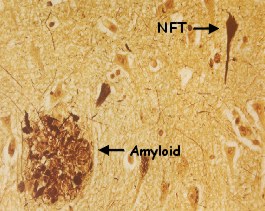
Aβ plaques & Tau tangles

Fig 1: Pathology of AD showing plaques and tangles.

Some would say a soul is the collective memories and personality traits of an individual. So, what is left if those memories and traits are erased? You and I might be far from old and senile (well I’m not old). But you know someone near & dear to you, who will have to deal with this existential crisis in their golden years. Alzheimer’s disease currently has two culprits, Beta amyloid (Aβ) which can form plaques on the brain and Tau protein, whose over expression can cause neurons to tangle up (NFT).

These pathologies appear to be affected by the APOE gene, certain variations of which are now recognized as dead-ringers for Alzheimer’s. The mechanism however is still very much in the process of being understood. More so, when considering the role of Tau.

Fig 2: Constant expression of plaque causing Aβ with varying levels of Tau shows little difference in pathology. Plaques and tangles remain present. Thus deletion or over expression of Tau is not enough to prevent AD pathology.

Although the signs of Alzheimer’s on a cellular level remained steady while playing with the knobs of Tau expression, the authors did find a difference is the cell & organism survivability. Hypothesizing that Tau helps the neuron deal with excitotoxicity, the damage to nerve cells through stimulation.

Don’t lose hope, although it’s difficult to get a full picture, we may have enough glimpses to make a clinical difference. Eventhough, we don’t quite understand the role between APOE, lipoproteins and Alzheimer’s pathology, on a higher symbolic level APOE is a great predictor of who is at risk for AD and sometimes even when. Best move for now is probably just to get your parents genotyped and planning active mental lifestyles for them, there should be a fix by the time I’m grey.

Citations: Reducing endogenous tau ameliorates amyloid beta-induced deficits in an Alzheimer’s disease mouse model by Roberson, et al.

Leave a comment

Filed under Genomics, Neuroimaging, Neurophysiology

Decided? No, we just finished saying Good Morning: Sage Congress 2011

“Therefore a sage has said, ‘I will do nothing (of purpose), and the people will be transformed of themselves; I will be fond of keeping still, and the people will of themselves become correct. I will take no trouble about it, and the people will of themselves become rich; I will manifest no ambition, and the people will of themselves attain to the primitive simplicity’ ”  reads Ch. 57 of the Tao Te Ching. How chillingly the 2 millennia old caricature of a wise-learned man holds true to this day.

Sage Bionetworks is a medical research organization, whose goal is “to share research and development of biological network models and their application to human disease and biology.” To this end, top geneticists, clinicians, computer scientists and pharmaceutical researchers gathered this weekend at UC San Francisco. We were given an inspirational speech by a cancer survivor, followed by report of the progress since last years congress. Although admirable on their own, the research and programs built in the last year seemed to remind us all again that in silico research was still closer to the speed of traditional life-science than the leaps and bounds by which the internet moves.

Example of an effort which aligns with & was presented at Sage

Projects like GenomeSpace by the Broad Institute give us hope of what’s possible while watching hours of debate and conjecture at Sagecon.  There were many distinguished scientists, authors , nobel laureates and government representatives, the totality of whose achievement here was coming to agreement on what should be built, who should build it and by when. Groups were divided into subgroups, and then those divided yet again. All the little policy details, software choices and even funding options would be worked out. There was a lot of talk.

Normal Conference VS Developer Conference. SHDH Illustrated by Derek Yu

Attending gatherings for software developers in silicon valley, their hackathons leave much to be desired at events like Sagecon, the least of which being the beer. I doubt anyone enjoys sitting in a stuffy blazer listening to talks for hours on end. The hacker events are very informal, there is no set goal, yet by the end of 24 hours there are often great new programs, friendships and even companies formed. Iteration rate is key to finding solutions and the rate-limiting step in the life-sciences & medicine isn’t the talent or resources it’s the culture; an opinion echoed by Sages’ own shorts-wearing heroes Aled Edwards & Eric Schadt.

“You must understand, young Hobbit, it takes a long time to say anything in Old Entish. And we never say anything unless it is worth taking a long time to say. “

Leave a comment

Filed under Genomics, Microbiology

Biotech for Hackers: Computational Genomics 1 of 2

A low hurdle to entry along with the ability to iterate rapidly is key to taking on problems & creating solutions. What do these solutions look like in genomics and why can hackers lead the way? Fig 1 shows something very similar to social interaction maps one comes across at places like Facebook.

Fig 1: Interaction map of genes implicated in Alzheimer's. Genes were grouped by those that have similar functions (squares) and those with different functions (circles). Modules with a red border have high confidence interactions. While the weight of the connecting green lines corresponds to the number of interactions between two sets.

The map above is of individual gene relationships where an algorithm began with 12 seed genes that previous experiments have shown to play a role in Alzheimer’s disease. These seeds were compared with 185 new candidate genes from regions deemed susceptible to carrying Alzheimer’s genes. From here, both experimental and computational data was combined to generate Fig 1, which the authors dubbed AD-PIN (Alzheimer’s Disease Protein Interaction Network).

Fig 2: Interactions discovered by the Hig-Confidence (HC) set generated by this study in context to known relationships in the Human Interactome (created in past studies).

What we learn by simply tracking genes already known to play a role in Alzheimer’s is the discovery of new regions of genetic code that are  also participating in the expression of related functions, in this case those being affected by the disease, such as memory. In Fig 2 we see that between seeds this algorithm produced 7 high confidence interaction results, of which 3 were  in common with previous studies. In addition to almost 200 new interactions, which can each lead to new therapies, blockbuster drugs and better understanding of the disease itself.

Many software developers have extensive experience and interest in dealing with large data sets, finding correlations  and creating meaningful solutions. However, much of our generation has had little exposure to these problems. Often resulting in the bandwagon effect, as one recent article put it “the latest fucking location fucking based fucking mobile fucking app.” Progress has often been linked to literacy, from books to programming, being able to read and write in life-code just might be the next stage.

Original published study: Interactome mapping suggests new mechanistic details underlying Alzheimer’s disease by Soler-Lopez et al.

1 Comment

Filed under Genomics